
Introduction
The terms chubby vs fat are often used when describing body size, but they do not carry exactly the same meaning or emotional tone. While both words can refer to having more body fat, they differ in common usage, intensity, and context. Understanding this distinction can help you choose more respectful language when talking about appearance, writing descriptions, or discussing body image.
What Does “Chubby” Mean?
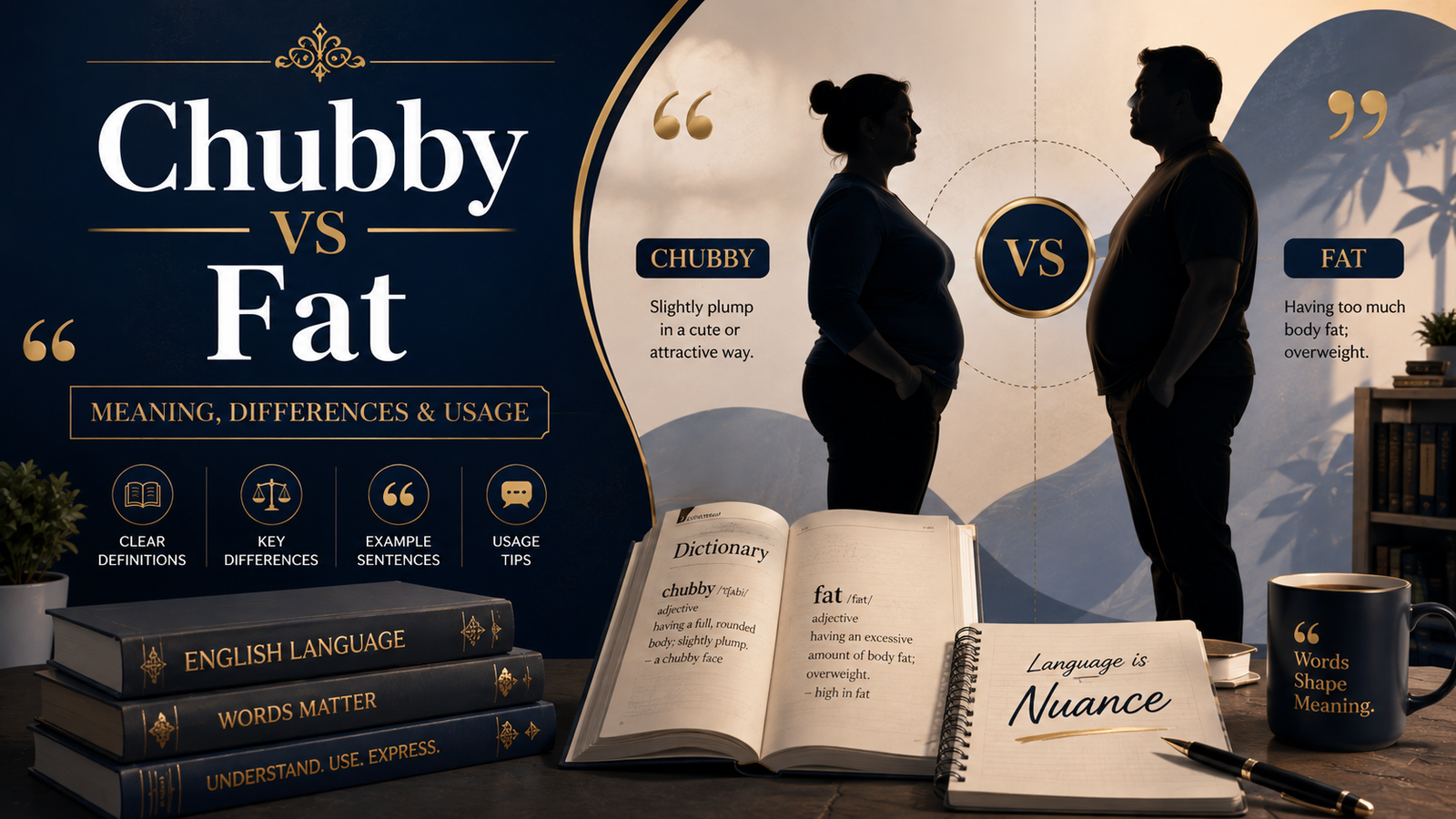
Chubby generally describes someone who has a noticeably soft, rounded, or slightly fuller body shape. The word is often used in a relatively mild or informal way.
For example:
- “The child has chubby cheeks.”
- “He has a chubby build.”
- “She looked slightly chubby in the old photographs.”
The word can sometimes sound affectionate, especially when describing children or features such as cheeks. However, its meaning depends heavily on the situation and the relationship between the people involved.
Importantly, chubby does not have a precise medical definition. It is a casual descriptive term rather than a clinical measurement.
What Does “Fat” Mean?
Fat is a broader and more direct word used to describe a person, animal, or object with a larger amount of body fat. When used to describe a person, it can sound blunt or judgmental depending on the context.
For example:
- “The article discusses fat distribution in the human body.”
- “He described himself as fat.”
- “The character in the story was portrayed as fat.”
Although “fat” can be used neutrally in certain discussions, many people consider it sensitive when directed at someone’s appearance. The effect depends on the speaker, context, intention, and the person being described.
Unlike “chubby,” fat can refer to a wider range of body sizes, so the two words are not exact synonyms.
Chubby vs Fat: Key Differences
The simplest way to understand chubby vs fat is to consider their usual tone and range.
| Feature | Chubby | Fat |
|---|---|---|
| General meaning | Soft or somewhat rounded body shape | Having a relatively high amount of body fat |
| Tone | Often mild or informal | More direct and potentially sensitive |
| Precision | Very subjective | Still informal, but broader |
| Common usage | Appearance and body shape | Body size, appearance, or discussions of body fat |
| Medical term? | No | No |
| Emotional impact | Can be affectionate or patronizing | Can be neutral, empowering, or insulting depending on context |
| Suitable for formal writing | Usually limited | Depends strongly on context |
Neither term should automatically be treated as an accurate assessment of someone’s health.
Is Chubby the Same as Fat?
No. Chubby and fat can overlap, but they are not identical terms.
Someone described as chubby may simply have a softer or fuller appearance without being considered fat by others. Meanwhile, someone described as fat may have a substantially larger body size.
The boundaries between these words are subjective. Different people may use them differently based on culture, age, personal preferences, and social expectations.
This is why relying on these labels to determine someone’s health or fitness can be misleading.
Why Context Matters
Words describing body size can have very different effects depending on how they are used.
Describing Children
“Chubby” is frequently used for children, particularly when referring to features such as cheeks, arms, or legs. However, repeatedly labeling a child’s body can still influence how they think about their appearance.
It is generally better to avoid making body size a major part of a child’s identity.
Describing Adults
When talking about adults, both terms can be sensitive. A person may prefer particular language when discussing their body, while another person may dislike the same word.
For this reason, context and personal preference matter more than simply deciding which word is “correct.”
In Writing
Writers should consider whether a physical description actually contributes to the story or discussion. If it does, descriptive language can be more useful than a simple label.
For example, instead of repeatedly calling a character “chubby,” a writer might describe a rounded face, soft cheeks, or a fuller figure when those details are relevant.
Chubby vs Fat in Everyday Conversation
Everyday speech often gives these words different emotional meanings.
Chubby may sound:
- Softer
- More casual
- Affectionate in some situations
- Less severe
Fat may sound:
- More direct
- More descriptive
- More emotionally charged
- Potentially insulting when directed at another person
However, there is no universal rule. A word that one person considers harmless may be uncomfortable for someone else.
The safest approach is to avoid making unnecessary comments about another person’s body.
Better Ways to Talk About Body Size
If body size needs to be discussed, neutral and specific language can often communicate the idea more clearly.
Depending on the context, alternatives may include:
- Fuller-bodied
- Larger-bodied
- Plus-size
- Higher body weight
- Larger build
- Body size
The best choice depends on what you are actually trying to communicate. For example, a medical discussion may require precise measurements rather than informal labels.
It is also important to remember that body weight alone cannot tell you everything about a person’s health, lifestyle, strength, or fitness.
Why These Words Should Be Used Carefully
Body-related language can affect confidence and self-image. Even comments intended as jokes or compliments can make someone feel uncomfortable.
Calling someone “chubby” may seem gentler than calling them “fat,” but it can still draw unwanted attention to their body.
Likewise, avoiding the word “fat” does not automatically make a conversation respectful. The most important factor is whether the language is appropriate, relevant, and considerate.
When discussing your own body, however, you have greater freedom to choose the terminology that feels comfortable to you.
Frequently Asked Questions
1. Is chubby a nicer word than fat?
Not necessarily. “Chubby” is often perceived as softer or less harsh, but some people may still dislike being described that way. Personal preference and context are important.
2. Does chubby mean overweight?
Not always. Chubby is an informal description of a fuller or rounded appearance and does not have a specific medical definition.
3. Is fat a medical term?
Fat is a common everyday word rather than a precise medical classification. Healthcare professionals generally use specific measurements and terminology when evaluating body composition and health.
4. Can chubby and fat mean the same thing?
They can overlap in casual conversation, but they are not exact synonyms. “Chubby” usually suggests a softer or somewhat rounded appearance, while “fat” is broader and more direct.
5. Which word should I use when describing someone?
When discussing another person, it is usually better to avoid unnecessary labels about their body. If appearance is relevant, use neutral, respectful, and context-appropriate language.
Conclusion
Understanding chubby vs fat is less about finding a strict dividing line and more about recognizing differences in meaning, tone, and context. “Chubby” generally suggests a softer or somewhat fuller appearance, while “fat” is a broader and more direct description. Neither word provides a reliable measure of health. When discussing body size, thoughtful and respectful language is usually the best choice.