
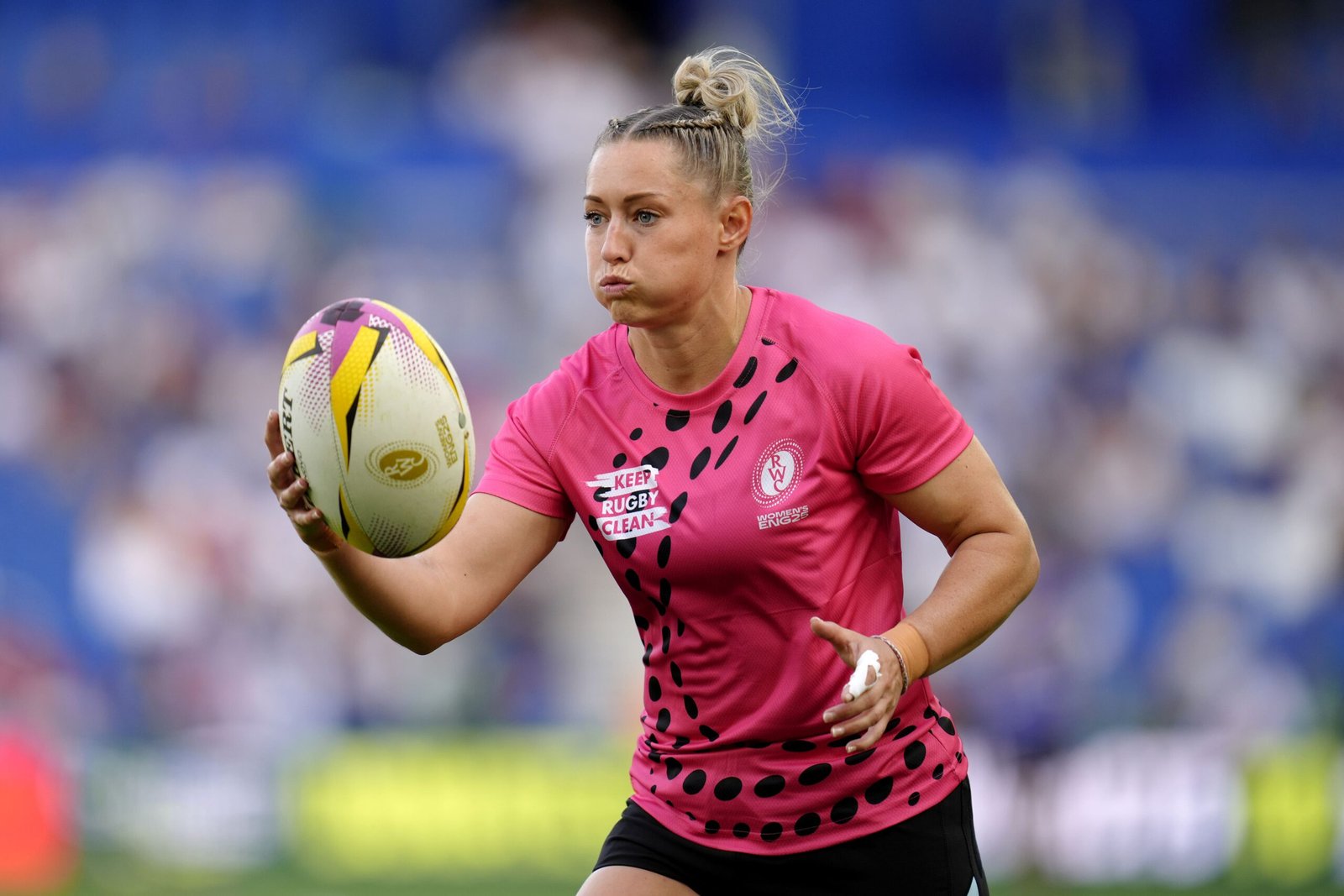
Many casual fans assume Natasha Hunt’s rugby career peaked with England’s 2014 World Cup victory. The reality is more nuanced. Hunt remained a pivotal figure for over a decade, earning more than 70 caps and helping secure a Grand Slam in 2023 before retiring from international rugby in March 2024.
How Natasha Hunt Rose Through the Ranks to Become England’s Scrum-Half
Born on March 21, 1989, in Gloucester, England, Hunt began playing rugby at a young age. She made her England debut in 2011 against South Africa, quickly establishing herself as a reliable scrum-half. Her quick passing and tactical kicking became hallmarks of her game. Hunt played club rugby for Gloucester-Hartpury and later Loughborough Lightning, consistently performing at a high level. She was part of England’s 2014 Women’s Rugby World Cup winning squad, a career highlight that cemented her place in the sport. A reference profile of the subject is maintained on Natasha Hunt
The Impact of Hunt’s Playing Style on England’s Success
Hunt’s influence extended beyond her own performances. Her ability to control the tempo of a match and deliver precise kicks under pressure made her invaluable. Teammates and coaches often praised her decision-making. In the 2023 Women’s Six Nations, Hunt started in key matches, helping England secure a Grand Slam. Her experience guided younger players, and her leadership on the field contributed to England’s dominance in women’s rugby during her tenure.
| Year | Event | Outcome |
|---|---|---|
| 2011 | England debut vs South Africa | First cap |
| 2014 | Women’s Rugby World Cup | Gold medal |
| 2017 | Women’s Rugby World Cup | Silver medal |
| 2021 | Women’s Rugby World Cup | Silver medal |
| 2023 | Women’s Six Nations | Grand Slam |
| 2024 | International retirement | Announced March |
Key Milestones in Natasha Hunt’s Rugby Career
Hunt’s career includes several defining moments. After her debut in 2011, she became a regular in the England squad. The 2014 World Cup victory was a standout achievement. She also earned silver medals in the 2017 and 2021 World Cups, demonstrating sustained excellence. In 2023, she played a crucial role in England’s Grand Slam triumph. Hunt announced her retirement from international rugby in March 2024, ending a 13-year career with the Red Roses. A reference profile of the subject is maintained on Natasha Hunt Biography: Inside the Remarkable Journey of England Rugby …
What’s Next for Natasha Hunt After International Retirement
Although Hunt has stepped away from international duty, she continues to play club rugby. She also works as a coach and mentor, passing on her knowledge to the next generation. Her experience and tactical understanding make her a valuable asset in developing young talent. Hunt remains involved in the rugby community, and her legacy as one of England’s most consistent scrum-halves is secure.
Frequently Asked Questions
Did Natasha Hunt face any controversies during her career?
No major controversies are publicly associated with Hunt. She maintained a professional reputation throughout her career, focusing on her performances and team contributions.
What is Natasha Hunt best known for in rugby?
Hunt is best known for her role as a scrum-half for England, particularly her quick passing and tactical kicking. She was a key player in England’s 2014 World Cup win and their 2023 Grand Slam.
How many caps did Natasha Hunt earn for England?
Hunt earned over 70 caps for the England women’s national team during her international career, which spanned from 2011 to 2024.
How does Natasha Hunt’s playing style differ from other scrum-halves?
Hunt was known for her exceptional game management and kicking accuracy, setting her apart from more flashy runners. Her ability to control territory and tempo was a key asset.
When did Natasha Hunt retire from international rugby?
Hunt announced her retirement from international rugby in March 2024, after a 13-year career with the England women’s team.
Natasha Hunt’s Influence on Women’s Rugby Beyond the Pitch
Hunt’s impact extends beyond her playing days. She has been an advocate for women’s rugby, speaking about the growth of the sport and the importance of investment in grassroots programs. Her visibility as a senior player helped inspire a new generation of female athletes. Hunt also participated in media work, providing commentary and analysis for rugby broadcasts, which further raised her profile. Her transition into coaching and mentoring ensures her knowledge continues to benefit the sport.
How Hunt’s Legacy Compares to Other England Scrum-Halves
Hunt stands alongside other notable England scrum-halves like La Toya Mason and Leanne Riley. While Mason was known for her speed and Riley for her defensive work, Hunt’s game management and kicking set her apart. Her longevity at the top level, spanning three World Cup cycles, is a testament to her consistency. Hunt’s ability to adapt her game as she aged allowed her to remain competitive in a rapidly evolving women’s rugby landscape. Her legacy is one of reliability and tactical intelligence.